“The scope of genomic medicine goes far beyond diagnosing rare genetic diseases. It has enormous potential for treating common conditions such as kidney disease.”
Dr Becky Ma
Specialist in Nephrology
Awardee of the 2023/24 HKCP-HKGI
Overseas Training Scholarship and Training Grant for Excellence in Genomic Medicine
Awardee of the 2024/25 HKAM-HKGI
Research Excellence Grants in Genomic Medicine
Kidney disease affects one in every 10 adults in Hong Kong, making it one of the most common chronic diseases. According to local data, approximately 12% of new end-stage kidney failure cases are attributed to genetic or unknown causes. “Genomic medicine helps us uncover the deeper origins of disease,” explains Dr Becky Ma.
A Lifesaver as Precision Diagnosis Reveals Disease Origins
While current kidney disease diagnosis primarily involves clinical assessment, blood and urine tests, and tissue biopsy, whole genome sequencing (WGS) has unlocked crucial diagnostic support. “Through WGS, we can identify the specific genetic variants causing kidney disease, especially important for conditions where similar clinical presentations have entirely different underlying causes,” Dr Ma noted.
The doctor recalled a case of a patient with stage-five kidney failure of unknown cause. When the patient was admitted, tissue biopsy was impossible because the kidneys had already severely atrophied. Through WGS, the patient was diagnosed with the rare hereditary condition Nephronophthisis, enabling targeted treatment. Understanding this disease led doctors to also identify the associated risk of eye complications, allowing for timely detection and treatment of retinal disease.

The Formidable Protection of Family Health Through Early Prevention and Monitoring
For families suffering from familial kidney diseases, WGS enables comprehensive prevention strategies. “Genomic sequencing helps us establish clear connections between genetic variants and kidney disease, allowing us to offer preventive monitoring for high-risk family members and intervene early to slow disease progression,”Dr Ma explained.
She used Polycystic Kidney Disease as an example, a relatively common hereditary condition affecting approximately one in every 1,000 to 2,500 individuals. According to Dr Ma, WGS can diagnose this condition before symptoms appear. “Early diagnosis means we can immediately prescribe targeted medications such as Tolvaptan to slow cyst growth and preserve kidney function,” she explained. “We can implement early prevention measures for complications such as hypertension and kidney infections, significantly improving long-term outcomes.”
Advancing Local Genomic Medicine Research is a Gamechanger
Precise diagnosis requires robust genomic data, and population-specific data is indispensable. “Different ethnic groups have distinct genetic profiles, so Western research findings don’t always apply to our local patients. For this reason, building a local genome database is essential for advancing precision medicine,” Dr Ma emphasised. “The Hong Kong Genome Project provides genomic data specific to the Southern Chinese population, revealing unique genetic variants that help us better serve local patients’ needs.”
Dr Ma said the practical experience she gained at HKGI was transformative: “I’ve seen firsthand how genomic data translates into clinical applications. Through my research into genetic associations in kidney transplant medications, I’ve witnessed the genuine hope that genomic medicine brings to kidney disease patients. I believe that by advancing WGS capabilities, we are building a foundation for precision medicine that will benefit not only kidney transplants but also potentially extend to other fields and complex disease treatments.”
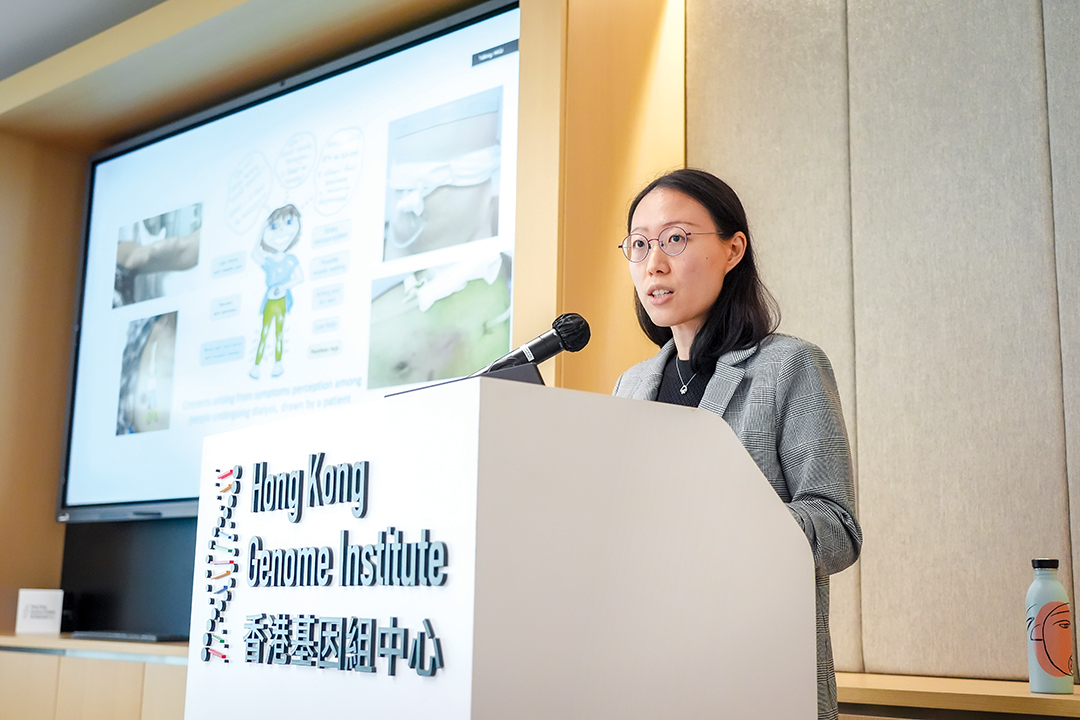
Precision Medication Improves Kidney Transplant Success
For patients with end-stage kidney disease, transplantation offers the best hope. However, demand far exceeds supply. More than 2,000 patients in Hong Kong are currently awaiting kidney transplants, with fewer than 100 donors becoming available each year. Dr Ma’s research focuses on personalised medication regimens that reduce rejection and side effects, thereby improving transplant outcomes.
According to Dr Ma, post-transplant patients require long-term use of the anti-rejection drug Tacrolimus (FK506). Current standard dosage has been developed primarily based on research data from Western populations, but Hong Kong patients exhibit significant genetic differences. Getting the balance right is critical, as insufficient drug levels result in rejection whereas excessive levels cause side effects such as hand tremors and diabetes.
WGS can identify the key genes that affect drug metabolism, enabling clinicians to predict individual patient responses and provide optimal dosage from the start. Dr Ma’s research promises to provide evidence-based prescribing guidelines for kidney transplant medications, advancing precision medicine in organ transplantation and improving outcomes for every valuable transplant opportunity.