Hereditary Cancer
What is hereditary cancer?
Cancer is the top killer in Hong Kong. According to the “Hong Kong Cancer Strategy 2019” report, cancer claimed over 14,000 lives in 2018. Many families have more than one member who has cancer – it is often the same type of cancer. This may be due to shared living conditions or lifestyles. For example, smoking or a high-fat diet increases the risk of cancer, and people sharing these aspects of their lifestyle may be similarly affected. In some cases, however, when the same type of cancer appears in multiple generations, it may be caused by genetic variants.
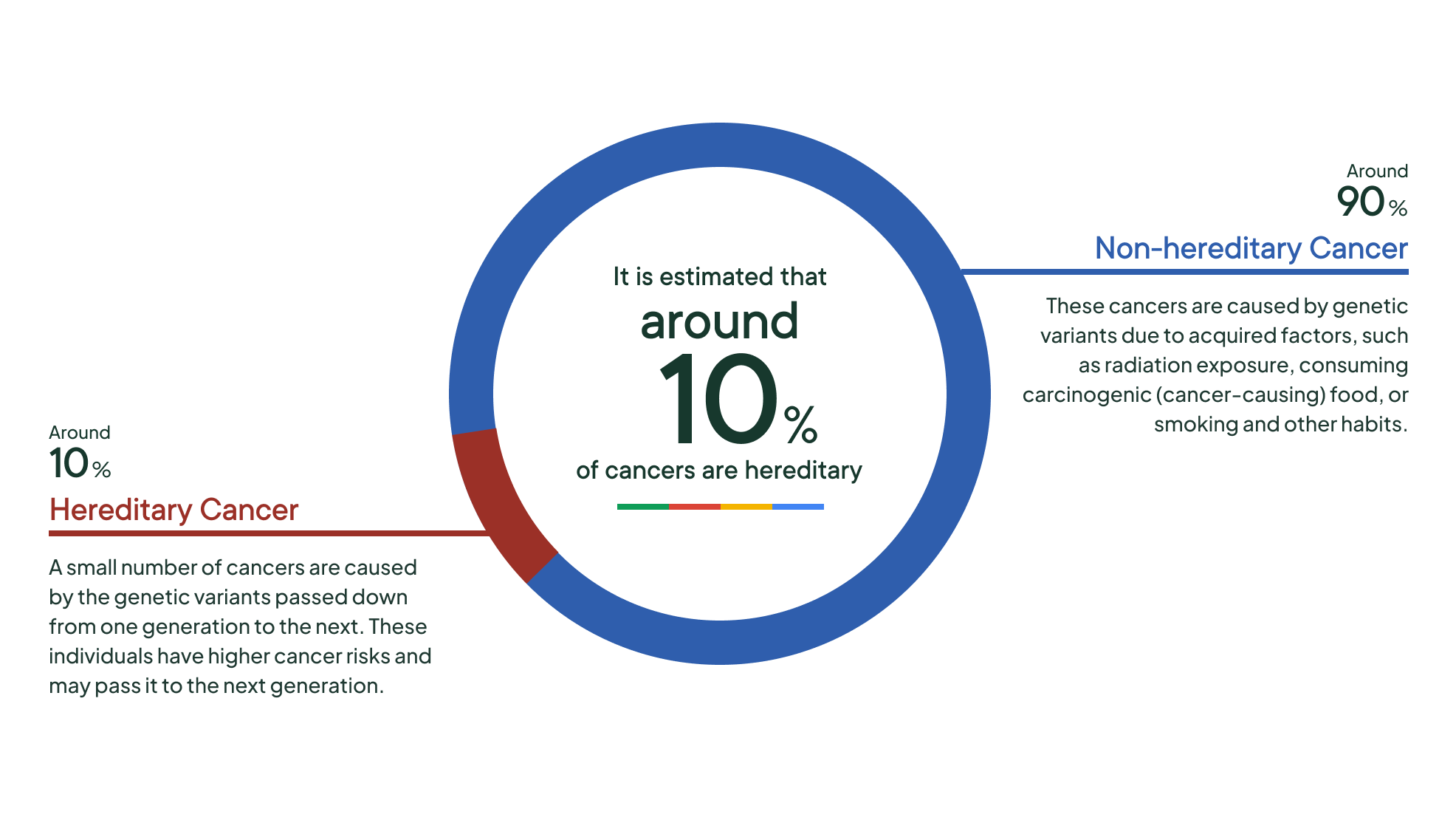
Hereditary cancer is often associated with the following types of cases:
- Confirmed cancer cases in relatives over more than one generation in the family; or
- The cancer is developed at an age younger than expected for that type of cancer; or
- The cancer patient is a child; or
- The same person has more than one type of cancer.
How Genomics Shapes Diagnosis and Care