About Genomics
.png)
What is DNA?
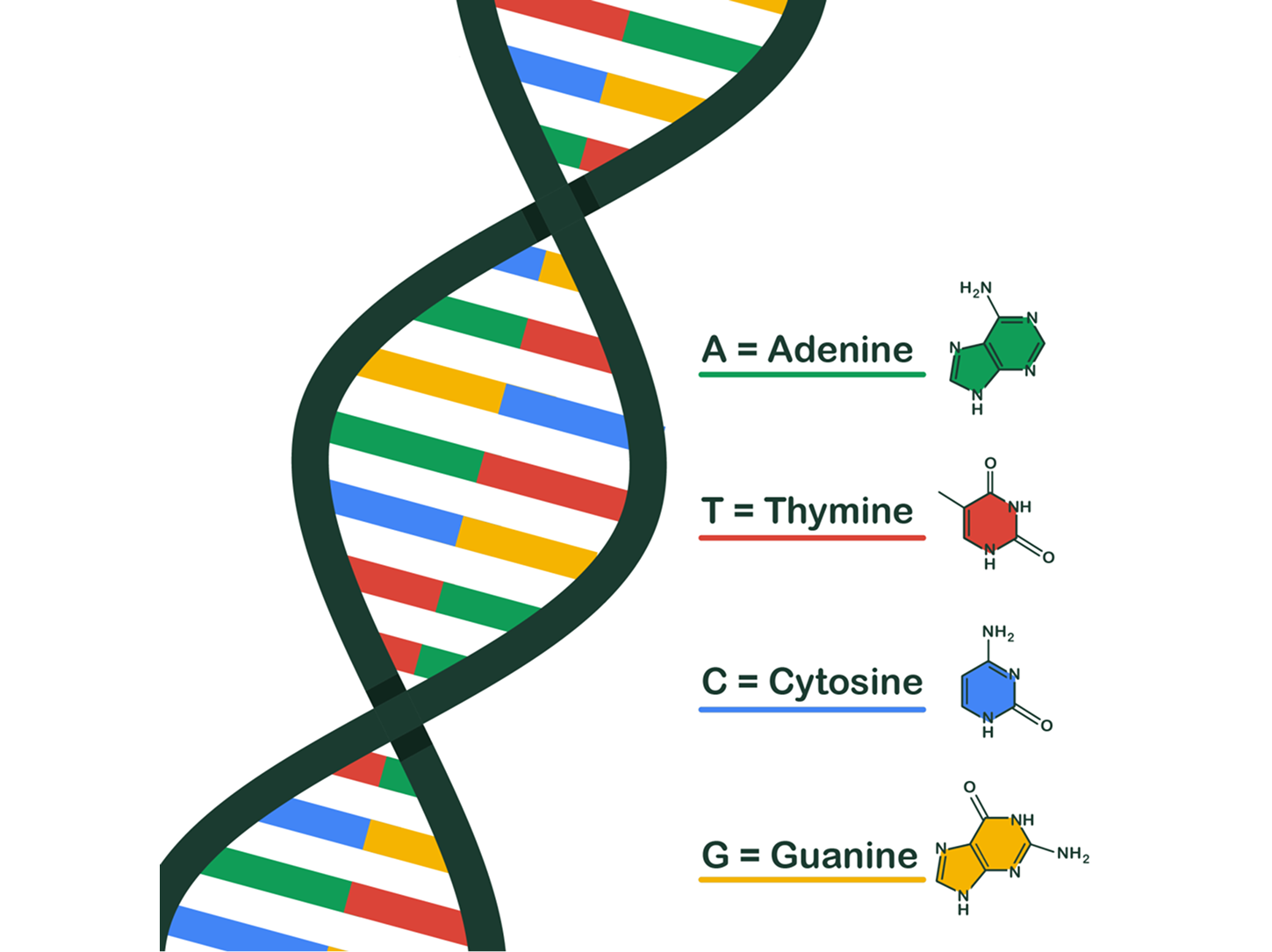
Deoxyribonucleic acid, or DNA in short, is a substance that exists in our human cells. Its structure consists of two long spiral chains (as shown below), on which four types of bases, which can be thought of like English letters: adenine (A), thymine (T), cytosine (C) , and guanine (G), serve as the basic unit of DNA. Our body relies on the order, or sequence, of these DNA bases on the chain to carry genetic information. This is similar to how we communicate in English by using the 26 letters in the alphabet to form words and sentences to convey different meanings.
Genome
English
.png)
DNA bases: A, T, C and G
.png)
English alphabet
.png)
The four bases are connected in a long DNA chain. Genes are segments of the DNA chain that carry specific genetic instructions for the body.
.png)
Letters can be combined to form complete sentences or paragraphs, to convey a specific message.
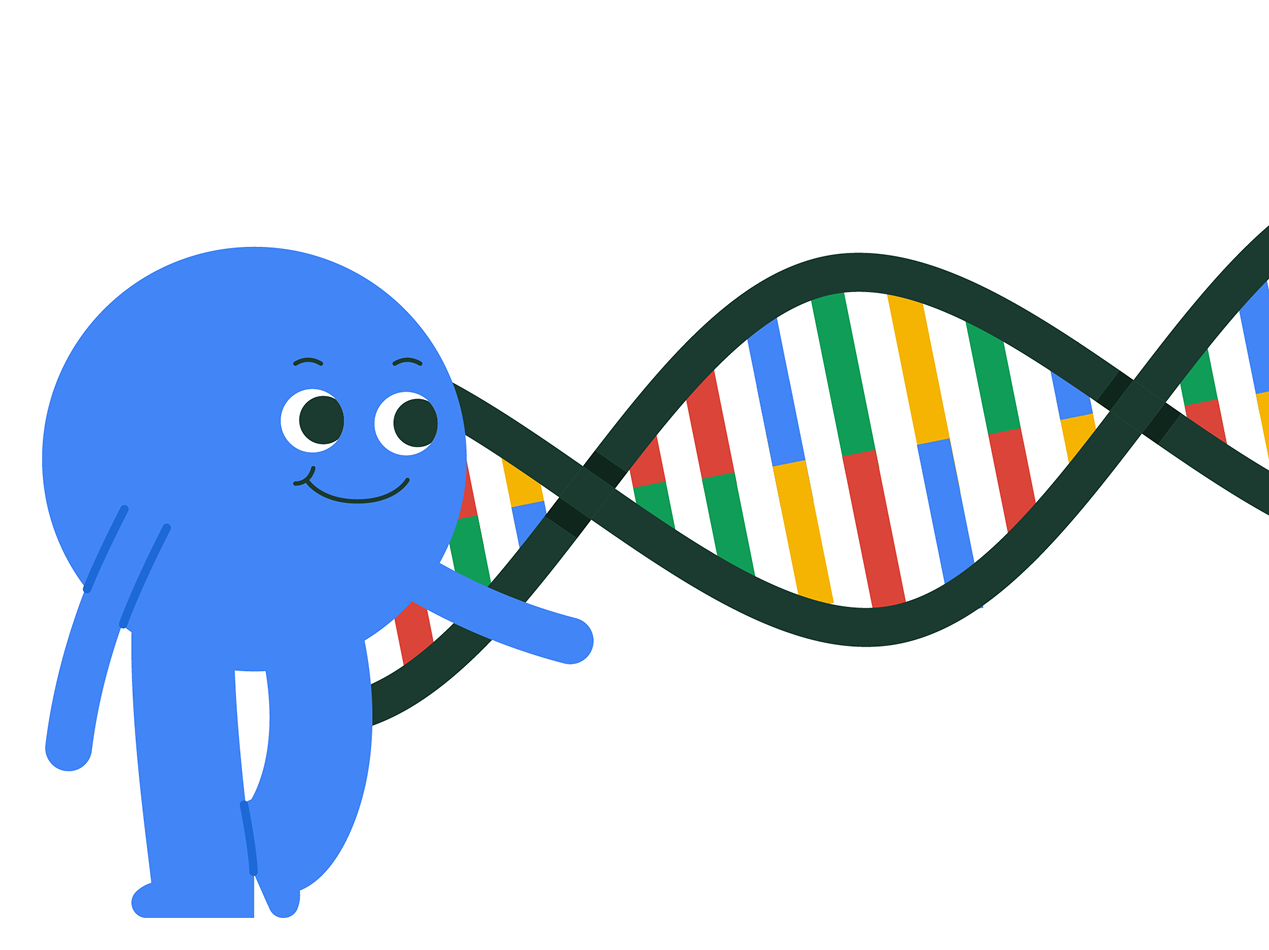
All DNA in the human body, including every gene and DNA base, are collectively called the genome.
.png)
All the essays, paragraphs and sentences come together to form a whole book.
Whole Genome Sequencing
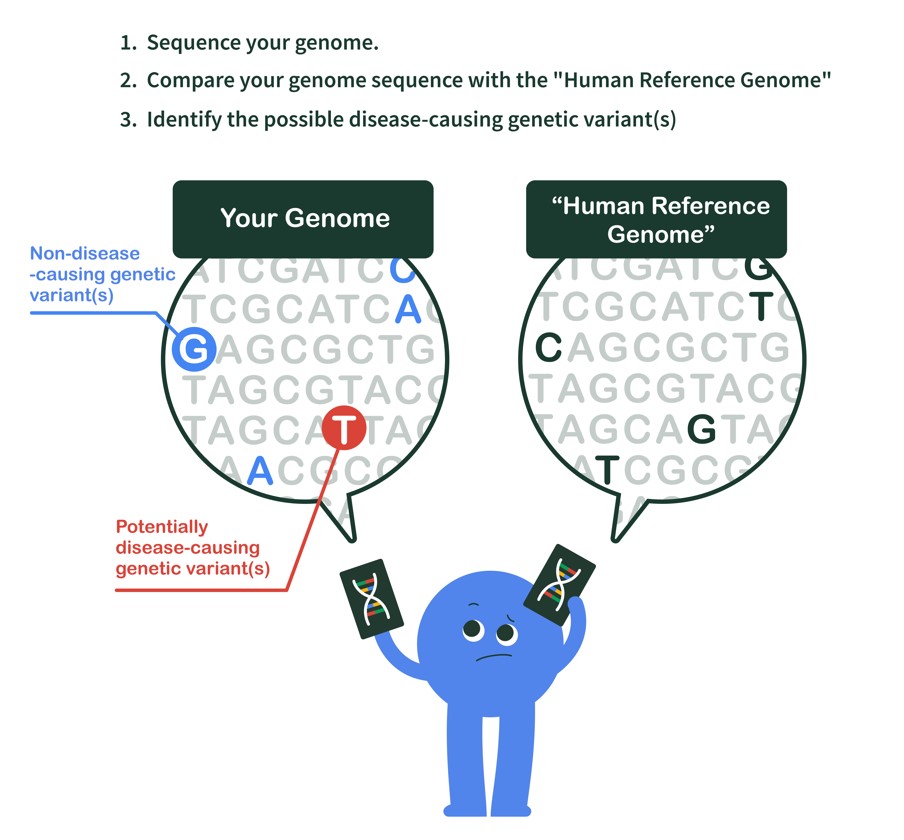
“Whole Genome Sequencing” (WGS) technology enables us to understand more about the human genome. It includes three main steps:
1. Sequencing
As the name suggests, sequencing is the process of reading 3 billion DNA bases in the human body one by one in order.
2. Data processing
After obtaining a large amount of genomic data from sequencing, bioinformaticians have to transform them into interpretable information. They have to compare the sequenced DNA with the “Human Reference Genome”, then detect the differences between the two. These differences are called genetic variants. There are millions of genetic variants in our body, and most of which are not disease-causing. On the contrary, they are what make us unique.
3. Data Analysis
Data Analysis is the most complex and time-consuming step. It involves the identification of disease-causing variants, also called pathogenic/likely pathogenic variants, among millions of genetic variants. It requires not only the knowledge and advancement in genomic science and genomic medicine, but also a large number of cases for long-term analysis and research.
“Genetics” and “Genomics”
.png)
Genomics — beginning with the “Human Genome Project”
In 1990, scientists from different countries began to study all the DNA in the human body, and launched a large-scale scientific exploration project – the “Human Genome Project”. The entire study took more than a decade and the first human genome blueprint was completed in 2003.
Scientists combined the anonymised data from 13 volunteers to form a “human reference genome” for use. Researchers from around the world can now compare data from sequencing an individual’s DNA with this “human reference genome” to identify differences, i.e. genetic variants.
The completion of the “Human Genome Project” opened the door to a new frontier in medical and scientific fields, one that could be used to advance genomics as a science.
From “Genetics” to “Genomics”
In the past, people studying genetics would investigate the structure and function of genes one by one. Since the “Human Genome Project” was completed and Whole Genome Sequencing technology has become mature, genomics has become a frontier in scientific research. Instead of probing genes one by one, scientists can now examine the entire genome and unravel the links, interactions, and roles among different regions of the genome.

How Genomics Shapes Diagnosis and Care