Our Life-changing Stories (1) - Unlocking the Mystery and Triumphing over Life’s Trials
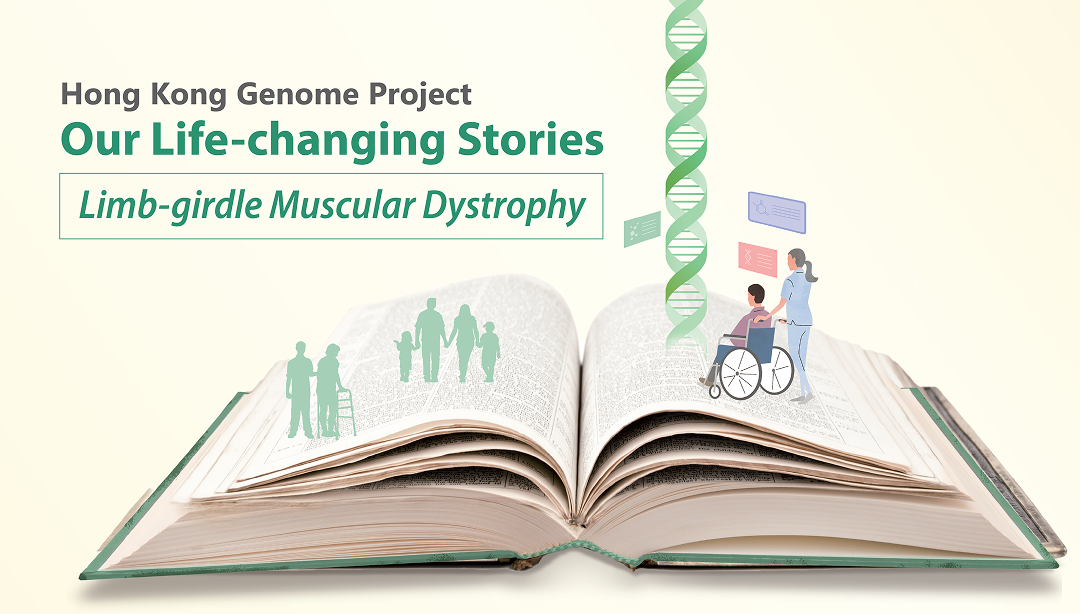
Life has a way of challenging our resolve with unexpected twists and turns. Ka-ho (a pseudonym), a sports enthusiast, was thrown a curveball when he developed muscle weakness. Suddenly, the simple joys of running and jumping faded into distant memory, and he spent over a decade in search of answers. Fortunately, Ka-ho’s physical limitations are no match for his inner strength. The resilience he has developed from sports training means he does not easily give in. Ultimately, the Hong Kong Genome Project (HKGP) confirmed he is suffering from a rare disease known as Limb-girdle Muscular Dystrophy (LGMD), putting an end to the deep-seated confusion and burden he has been carrying around for years. Now, he is able to seize every moment and plan his treatment and future with renewed determination.
Ka-ho has always been a sports enthusiast, with a passion for sports that began at a young age, defining a life filled with dynamic movement. However, as he approached his 40th year while pursuing his ambitions, an unexpected health challenge crept up. At the age of 40, Ka-ho started experiencing weakness in his legs and pain in his back, while his walking pace gradually slowed. He dismissed these symptoms as muscle fatigue from exercise, but it was not until standing also became a struggle that he recognised the seriousness of his condition and sought medical attention. This marked the start of a decade-long quest to uncover the mysteries behind his condition.
Whole Genome Sequencing Unravels a Decade Mystery
Over the years, Ka-ho continuously sought medical advice and underwent numerous tests. Despite completing all relevant examinations, a definitive diagnosis remained elusive. Fortunately, Ka-ho remained undeterred. In 2021, 12 years after his symptoms first appeared, he was referred by his hospital to the newly launched HKGP. The dedicated HKGP team conducted whole genome sequencing (WGS), which finally revealed a genetic mutation, confirming that Ka-ho has a rare disease known as LGMD Type 2A.
This rare condition is a subtype of LGMD. The onset of the disease is unpredictable, with muscle weakness and atrophy affecting the shoulders, hips and torso, progressively worsening over time. Patients typically experience tightening of the Achilles tendon, leading to challenges in mobility.
Ka-ho vividly recalled the moment when he received the explanation of the sequencing results. After the initial shock and intense emotion, he soon felt a profound sense of relief washing over him. At long last, he could put his inner turmoil behind him, emerging from the fog of doubt. Understanding the trajectory of his illness, Ka-ho had a clear direction for planning his future.
When it came to clinical care, with the analysis results from WGS, healthcare professionals were able to develop a personalised disease management plan for Ka-ho. Their primary goal was to slow the progression of his conditions while focusing on improving and preserving his mobility. In addition to physiotherapy, Ka-ho follows his therapist’s advice by performing daily home exercises, such as leg stretches, to maintain muscle strength. He has also gained a better understanding of his disease’s progression and potential challenges he may face. He proactively embraces the early adoption of various assistive tools, such as canes and wheelchairs, ensuring that his condition does not limit his future quality of life.
A Rocky Road, Yet Unshaken with an Unbreakable Spirit
Ka-ho’s willpower and perseverance honed through his years of sports training carried him through his decade-long quest for answers. With the help of HKGP, he finally found the explanation he was looking for, allowing him to find peace and lift a heavy burden off his shoulders. He is now tackling his condition head-on, adhering to a personalised disease management plan designed by HKGP’s team, in the hope of slowing the progression of his symptoms.
It is said: “When the mountain won’t yield, the path must change. When the path is unyielding, one must adapt. And when adaptation seems impossible, it’s time to shift one’s mindset.” With this change in perspective, Ka-ho has chosen to live fully in the present, plan for his future, and resolutely face life’s hurdles.
Learn About Limb-girdle Muscular Dystrophy
Disease Incidence
Limb-girdle Muscular Dystrophy (LGMD) can be classified into more than 20 subtypes, including Type 2A. On average, there are only about one to nine cases per 100,000 individuals. The condition is caused by mutations in the CAPN3 gene on chromosome 15, resulting in deficiencies in the calcium-activated protease (Calpain-3) within muscle cells, which affects the normal function of skeletal muscle.
Symptoms
Different types of LGMD may present various symptoms. However, a common feature among patients is weakness in the lower limb muscles, which causes frequent falls and difficulties in running, stairs climbing, and standing. As the disease progresses, mobility may become increasingly difficult, necessitating the use of wheelchairs and other assistive devices.
Currently, there is no specific treatment for LGMD, and care needs to be personalised to each patient’s circumstances. The primary objectives of treatment focus on extending life expectancy and improving quality of life. These goals are achieved through weight management, physiotherapy, and stretching exercises to reduce the risk of muscle tightening, along with the use of supportive medications, respiratory support, and heart health monitoring.